How much wood should a small shop buy?
Buy enough to cover the wood you expect to use, keep it inside the shed, and buy the extra pack only when the price you expect makes storing it cheaper than waiting. In a calm six months that plan cost about the same as a simple cushion. The shed still has to be in the plan, or a busy month forces a rush buy.
A shop, a shed, and one decision
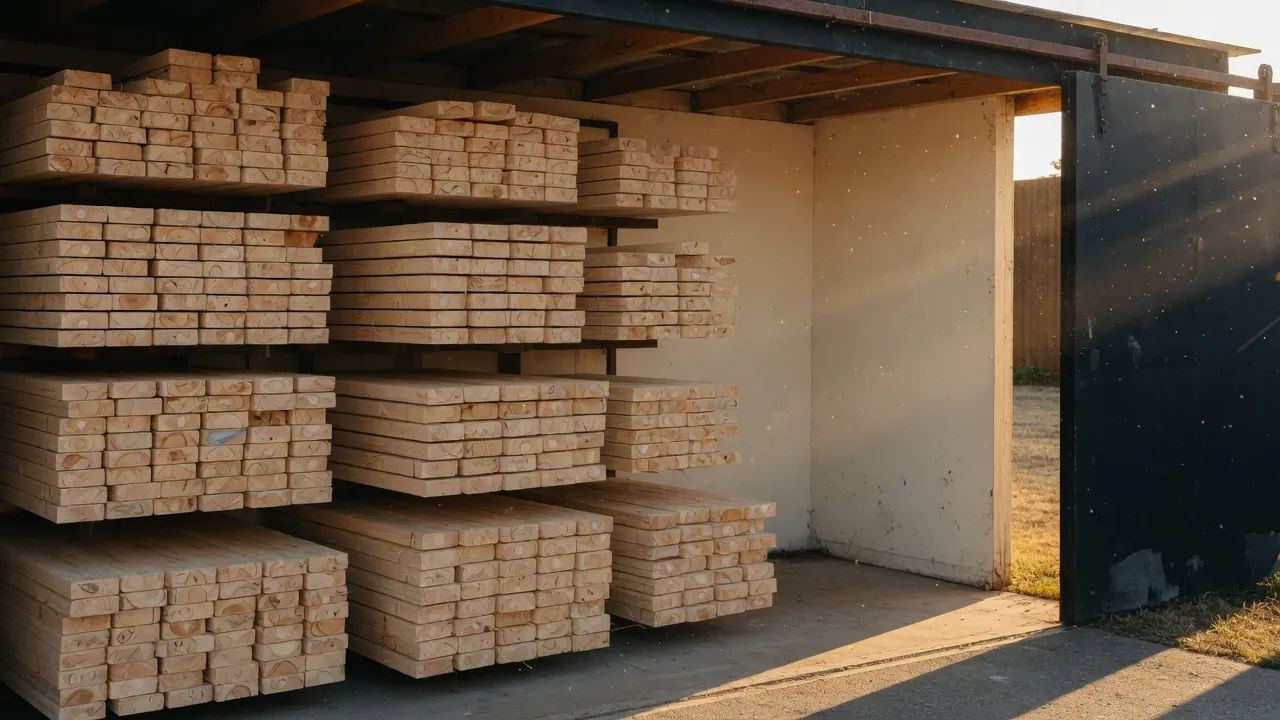
Picture a small framing shop. Each month it decides how many packs of lumber to buy. A pack is one yard bundle. The shed holds 100 packs, and it cannot hold a 101st. April starts with 40 packs already inside.
Keeping a pack in the shed costs $1.50 for the month. If a job needs a pack that is not there, the shop rush buys it at 30 percent over that month's price. The decision is a number for each month: how many packs to buy, without going over 100, and without going below zero.
Real prices, real busy months, a made up shop
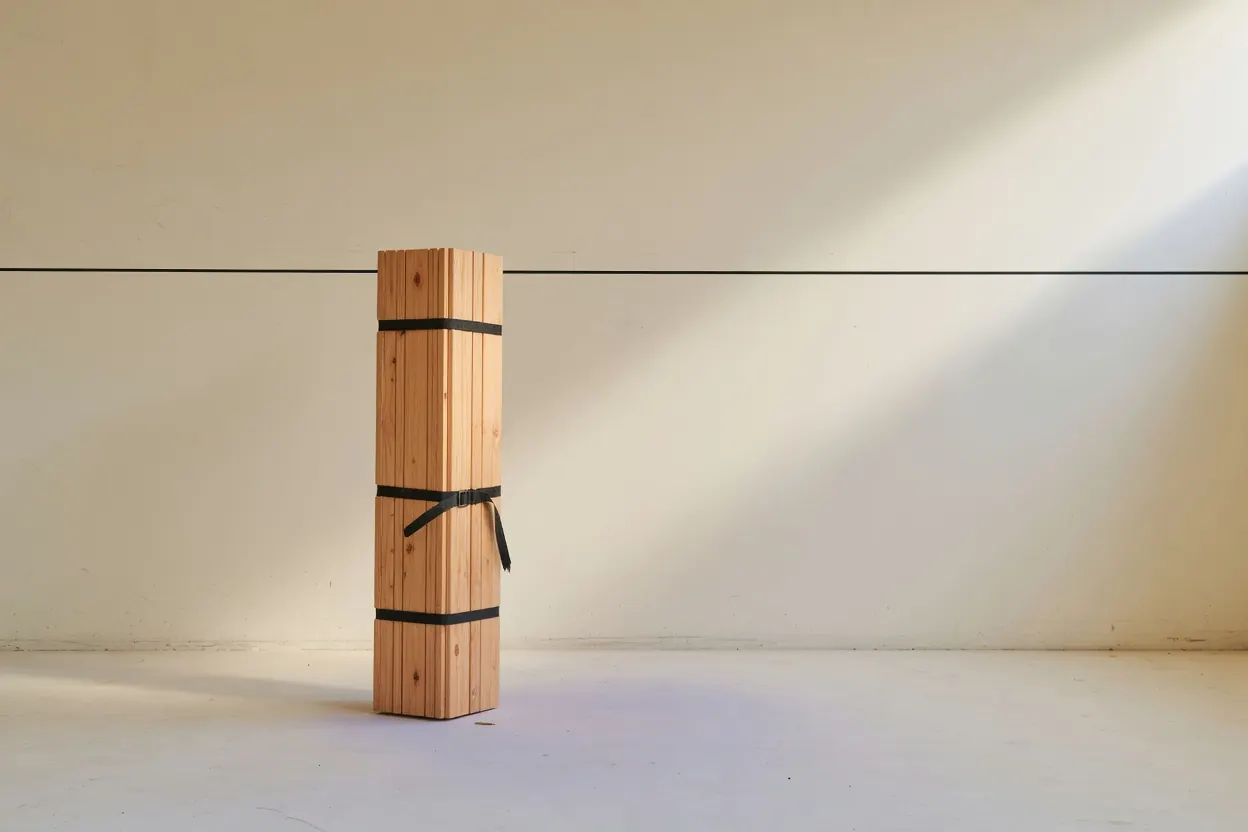
The shop itself is not a real customer. Two public series are. How much wood the shop needs each month follows US single family housing starts (FRED series HOUST1F), scaled so a normal 2026 month is about 80 packs. The price follows the softwood lumber producer price index (FRED series WPU0811), at $0.35 per index point, so a pack costs about $100 in 2026.
The six months under the test are April to September 2026. The forecast was built only from months before April, then compared with what actually happened.
The forecast, tested before anyone trusted it
Two simple methods were tried on the year before this test. For the amount of wood, the average of that same month over three years missed less than repeating last year, so that is the one the plan used. For the price, repeating the same month last year missed less, so that is the price the plan expected.
On the six months themselves, the amount was off by 5.8 packs a month, about 7 percent. The price was off by about $8 a pack. The price forecast expected lumber to get cheaper. It did not. July went to $105.
The buys
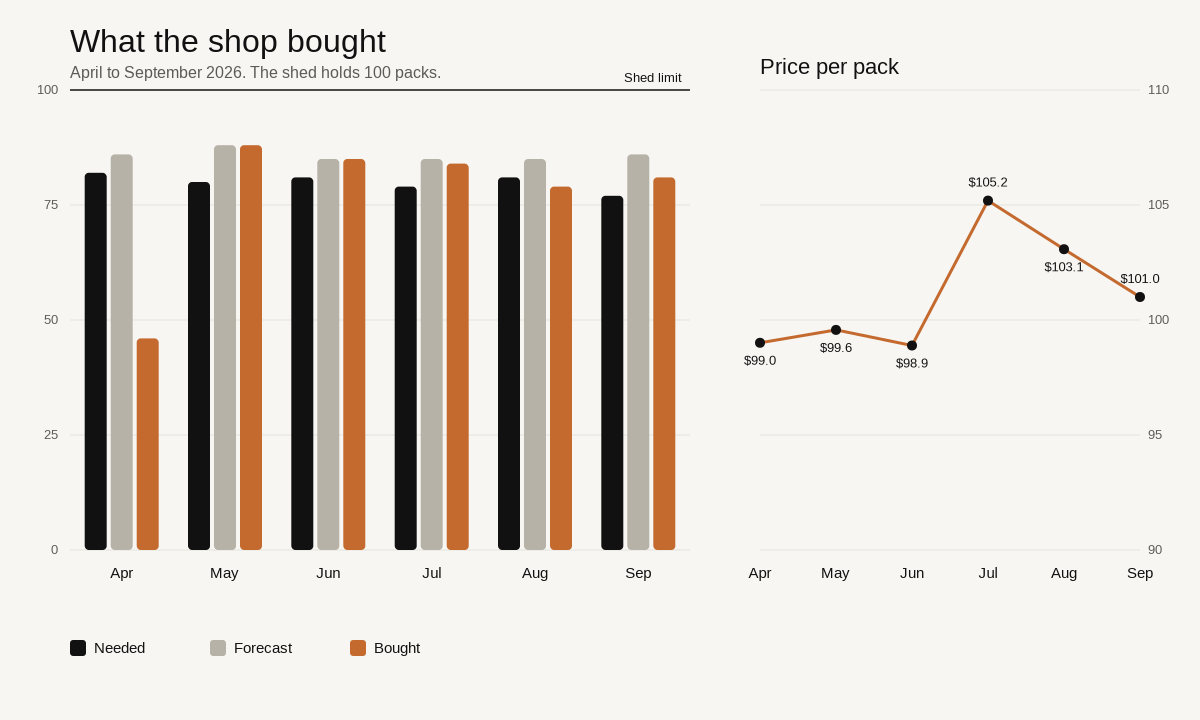
April: needed 82, forecast 86, price $99.01, bought 46, 4 left in the shed.
May: needed 80, forecast 88, price $99.57, bought 88, 12 left.
June: needed 81, forecast 85, price $98.89, bought 85, 16 left.
July: needed 79, forecast 85, price $105.19, bought 84, 21 left.
August: needed 81, forecast 85, price $103.08, bought 79, 19 left.
September: needed 77, forecast 86, price $101.00, bought 81, 23 left.
Every job was covered. There were no rush buys. The plan did not fill the shed, because it expected the price to fall, and storing extra wood would have cost money for no gain.
What the six months cost
The plan cost $47,025. A simple rule, buy the forecast and keep a cushion of 20 packs, never above 100, cost $47,041. Prices were calm, so the two came out the same for practical purposes.
If the shop had known that July would cost $105, it would have filled the shed in June at $98.89. That hindsight plan costs $44,479 for the same six months. About $2,500 of that gap is the July price the forecast missed. The shed of 100 packs is what makes that early buy possible. A smaller shed could not have held it.
The same shed in a wild year
Run the same shop on January to June 2021, when lumber spiked. May reached about $204 a pack. The price forecast, built the same way, was off by about $85 a pack. The written plan then cost $102,282. The simple cushion rule cost $97,295. A plan follows the forecast it is given. When the price forecast is that far off, the simple rule wins, and the report should say so.
Try it on your own orders
Your shed, your lead time and your own sales are the version that matters. Upload the export, say how much room you have and what a missing unit costs, and the first forecast is free for the first 50 businesses. No credit card and no sales call.